China’s wearable market is moving from simple step counting toward continuous health monitoring. Wearable Health Technology now includes smartwatches, fitness bands, ECG-enabled devices, sleep trackers, and connected medical sensors. IDC’s China Quarterly Wearable Device Tracker reported more than 170 million wearable device shipments in China during 2023, showing the market’s enormous manufacturing depth. However, shipment volume alone does not prove medical value.
The strongest Chinese suppliers combine sensor engineering, software platforms, production scale, and regulatory awareness. Huawei, Xiaomi, Honor, and Zepp Health remain highly visible in consumer wearables. Companies such as Yuwell, Lepu Medical, and other specialized manufacturers contribute more clinical and home-monitoring expertise. Their products may measure heart rate, blood oxygen, temperature, sleep patterns, or single-lead ECG signals. Accuracy depends on the device, user, skin contact, algorithm, and testing conditions.
The ranking is not perfectly objective. It should not be based only on brand popularity. Deloitte’s technology research has repeatedly identified health monitoring as a major reason consumers adopt connected devices. Grand View Research also projects strong long-term growth for the global wearable technology market. These findings support the sector’s commercial potential, but they do not replace independent validation. Buyers should examine ISO certifications, published accuracy studies, data-security practices, app support, warranty terms, and after-sales service. Real experience matters. A comfortable watch that users wear daily may produce more useful data than an advanced device left in a drawer. This guide therefore compares China’s leading suppliers through practical performance, technical capability, credibility, and product suitability. Some conclusions may change as algorithms and regulations evolve. That uncertainty deserves attention.
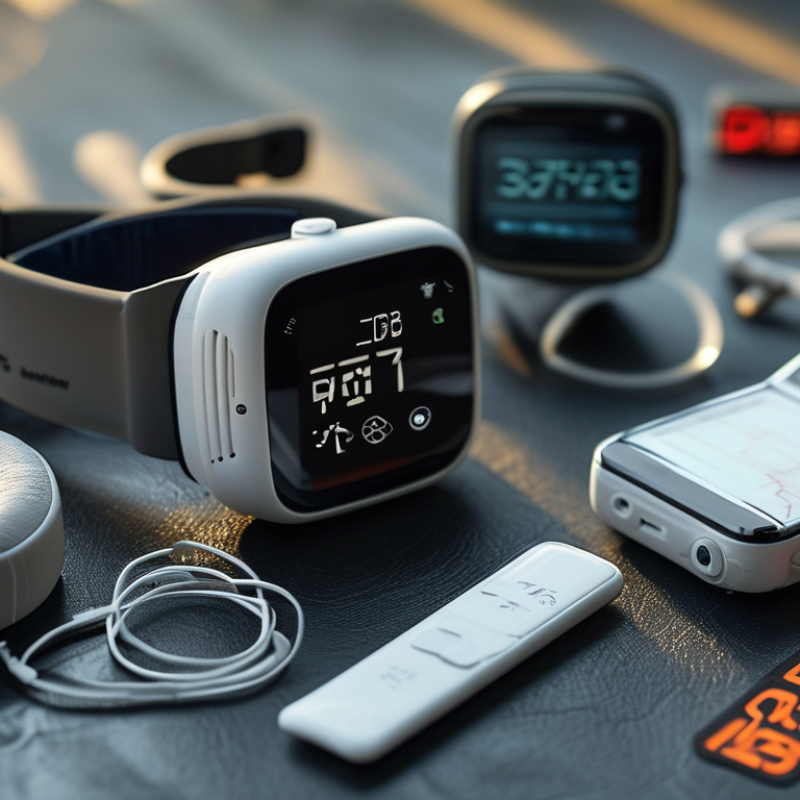
A reliable Chinese wearable health technology supplier offers more than attractive hardware. It combines sensor engineering, stable manufacturing, software development, and responsive technical support. Look for suppliers with documented testing procedures, traceable components, and experienced medical or biomedical engineers. Clear evidence matters. Ask for accuracy reports, calibration records, environmental tests, and product samples from current production lines.
Practical experience often reveals more than a sales presentation. A capable supplier can explain how skin movement, sweat, temperature, and loose straps affect readings. It should also describe data protection measures in plain language. Strong suppliers support customization, firmware updates, packaging control, and quality inspections before shipment. Yet no supplier is perfect. Some testing data may come from limited conditions, so independent verification remains wise. Small details matter.
Tips:
Visit the factory when possible. Check production records, not only showroom samples. Request a pilot order with defined accuracy targets. Review response times for technical questions. Ask who handles failures after delivery. Compare repeated measurements under walking, resting, and changing temperatures. A low price can hide weak calibration or limited support. That risk deserves careful attention.
China’s wearable health suppliers increasingly serve several distinct device categories. Activity and sleep trackers measure steps, heart rate, oxygen saturation, and sleep duration. IDC reported more than 500 million wearable-device shipments worldwide in 2023, showing strong demand for everyday monitoring. China-based manufacturers often supply sensors, compact electronics, mobile applications, and contract production for these products.
More advanced devices include ECG-enabled watches, continuous glucose-monitoring systems, blood-pressure monitors, smart rings, and rehabilitation sensors. These products require stronger clinical validation, stable algorithms, and careful data management. A 2024 report from the International Data Corporation identified health monitoring as a major growth driver in wearable technology. However, a sensor reading is not automatically a medical result. Context matters. Users may move, sweat, or wear a device loosely.
Services form another key category. They include remote patient monitoring, fitness coaching, sleep analysis, digital therapy support, and software platforms for clinics. Suppliers may provide dashboards, cloud storage, device integration, and technical maintenance. The World Health Organization continues to report large gaps in physical activity worldwide, supporting demand for practical coaching tools. Still, supplier claims should be tested against independent accuracy studies, transparent privacy policies, and applicable medical-device requirements. The industry is improving, but some marketing remains ahead of evidence.
The chart presents rounded 2024 global market estimates for major wearable health technology categories. Smartwatches and fitness trackers represent the largest consumer-facing segments, while medical monitoring patches and sensor-based devices support clinical monitoring, remote patient care, and chronic-condition management.
Data basis: rounded estimates synthesized from publicly reported 2024 wearable technology and digital health market research; values are shown in billions of U.S. dollars and exclude company or brand-level figures.
China’s leading wearable health suppliers usually fall into three groups: OEM manufacturers, sensor specialists, and clinical-data solution providers. Their strongest profiles combine high-volume assembly with flexible product engineering. IDC reported 537.9 million wearable devices shipped worldwide in 2024, showing sustained demand for reliable supply chains.
Core capabilities differ sharply. OEM suppliers often provide rapid prototyping, injection molding, battery integration, and automated testing. Sensor-focused teams develop photoplethysmography, electrocardiogram, blood oxygen, skin temperature, and motion-monitoring modules. More advanced suppliers add algorithm development, cloud dashboards, and API integration for hospitals or enterprise platforms. The quality benchmark is not only a smaller watch. It is repeatable data.
Compliance experience is essential. Suppliers serving regulated markets should demonstrate ISO 13485 quality systems and carefully document risk controls. IEC 60601 principles may also guide relevant medical electrical designs. Deloitte’s Connected Consumer research has repeatedly identified privacy and security as barriers to connected-device adoption. A capable supplier therefore needs encryption, access control, traceable firmware updates, and clear data ownership policies.
Some claims remain difficult to verify. A polished sample does not prove clinical accuracy. Independent validation, calibration records, and real-world testing matter more. Suppliers should disclose sensor limitations, skin-contact variables, and battery-aging effects. That honesty builds trust. It also exposes weaknesses. True expertise is measurable in test reports, not factory photographs.
China remains a major production base for wearable health technology, supported by dense electronics, sensor, battery, and molding supply chains. IDC’s Worldwide Quarterly Wearable Device Tracker reported approximately 534 million wearable units shipped globally in 2024. That scale increases pressure on suppliers to prove consistency, not merely capacity.
Quality begins with a controlled manufacturing process. Qualified suppliers should maintain ISO 9001 systems and use documented incoming inspection for sensors, batteries, optical modules, and skin-contact materials. Medical-purpose products may also require ISO 13485, ISO 14971 risk management, and IEC 60601-1 electrical safety testing. Software-connected devices should consider IEC 62304 controls. Certification depends on the product’s intended use. A fitness tracker is not automatically a medical device.
Traceability matters. Each production batch should link test results, firmware versions, calibration records, and operator data. Audits should examine real samples, not only polished procedures. Independent testing can verify accuracy, temperature resistance, battery safety, biocompatibility, and wireless performance. The FDA’s Quality Management System Regulation transition toward ISO 13485 alignment also shows why suppliers need stronger global documentation practices.
A certificate is not proof of every shipment. That distinction is often missed. Factory audits frequently uncover weak rework records or inconsistent calibration. Suppliers should therefore define acceptance limits, conduct periodic capability studies, and retain complaint data. Some weaknesses remain unavoidable, especially with optical measurements on different skin tones. Honest validation is better than inflated accuracy claims.
| Evaluation Dimension | Relevant Requirement or Standard | What a Qualified Supplier Should Demonstrate | Verification Evidence | Importance |
|---|---|---|---|---|
| Quality Management System | ISO 13485:2016 for medical-device quality management; ISO 9001:2015 for general quality management | Documented design controls, supplier management, complaint handling, corrective actions, traceability, and controlled production procedures | Current certificate, certification scope, issuing body, audit status, and quality manual extracts | Critical |
| Regulatory Classification | Medical-device classification depends on intended use, claims, risk, and jurisdiction | Clear separation between wellness functions and medical functions, with a documented regulatory strategy before production | Intended-use statement, risk classification rationale, regulatory pathway, and product technical documentation | Critical |
| Risk Management | ISO 14971:2019 | A risk-management process covering sensor errors, skin contact, battery hazards, software faults, cybersecurity, and foreseeable misuse | Risk-management plan, hazard analysis, risk-control records, residual-risk evaluation, and post-market monitoring process | Critical |
| Electrical and Patient Safety | IEC 60601-1 where the product falls within the scope of medical electrical equipment | Controls for electrical shock, leakage current, insulation, abnormal operation, mechanical safety, and essential performance | Test reports from an appropriately qualified laboratory and an explanation of applicable deviations or collateral standards | Critical |
| Software Lifecycle | IEC 62304 for medical-device software lifecycle processes | Version control, requirements traceability, architecture records, verification testing, defect management, and release approval | Software development plan, traceability matrix, test records, cybersecurity controls, and change-control history | Critical |
| Human Factors and Usability | IEC 62366-1 | Usability engineering for alerts, displays, mobile applications, charging, fitting, cleaning, and foreseeable user errors | Use specifications, use-related risk analysis, formative evaluations, summative evaluation, and approved labeling | High |
| Biocompatibility and Skin Contact | ISO 10993 series, when the device has applicable body or skin contact | Material controls for wristbands, housings, adhesives, electrodes, coatings, and other patient-contact components | Material declarations, supplier certificates, biological evaluation plan, and relevant laboratory test reports | High |
| Wireless and Radio Compliance | Applicable national radio requirements; FCC Part 15 for the United States; radio-equipment requirements in target markets | Validated wireless performance, controlled radio modules, antenna configuration, coexistence testing, and region-specific approvals | RF test reports, modular approval records where applicable, antenna specifications, and final-product compliance assessment | High |
| Environmental and Chemical Compliance | RoHS Directive 2011/65/EU and applicable restricted-substance requirements in the destination market | Controlled materials, compliant solder and plastics, supplier declarations, and production controls that prevent material substitution | RoHS test reports, material declarations, restricted-substance records, and approved supplier lists | High |
| Manufacturing Process Control | Documented process validation and production controls appropriate to product risk | Controlled SMT assembly, sensor calibration, battery installation, firmware programming, waterproofing, and final functional testing | Process flow, work instructions, inspection plans, calibration records, first-article reports, and process-validation documents | Critical |
| Sensor and Measurement Performance | Performance specifications must be supported by verification and validation appropriate to each claimed measurement | Defined accuracy, precision, repeatability, operating limits, calibration method, and comparison method for heart rate, temperature, motion, or other functions | Validation protocol, acceptance criteria, representative test data, calibration certificates, and measurement-system analysis | Critical |
| Battery and Reliability Testing | Applicable battery transport, safety, reliability, and product-specific requirements | Protection against overcharge, over-discharge, short circuit, overheating, swelling, and premature capacity loss | Battery specifications, safety test reports, cycle-life data, abuse-test results, transport documentation, and failure-analysis records | High |
| Traceability and Change Control | Documented control of components, firmware, tooling, suppliers, and production batches | Ability to identify affected lots and assess the impact of component, software, material, or process changes | Lot records, serial-number structure, engineering-change notices, approved vendor list, and recall or corrective-action procedure | Critical |
| Pre-Shipment Quality Inspection | Customer-defined acceptance criteria supported by documented inspection procedures | 100% functional testing for critical functions, visual inspection, connectivity checks, charging verification, and sampling inspection for cosmetic attributes | Inspection checklist, inspection results, nonconformance records, corrective actions, and signed final-release report | High |
Note: Certification and testing requirements vary according to the product’s intended use, medical claims, risk classification, technical design, and destination market. Certificates should always be checked for scope, validity, issuing organization, and coverage of the actual manufacturing site and product.
China’s wearable health technology suppliers deserve careful, evidence-based evaluation. IDC reported 520.5 million wearable devices shipped worldwide in 2023, despite a 1.7% annual decline. This pressure can encourage aggressive pricing. It can also hide quality compromises.
Ask for recent audit records, production photos, and documented quality procedures. ISO 13485 certification is important for medical-device manufacturing, but certification alone proves little. Check whether each sensor has calibration records and traceable test results.
Request samples from normal production, not specially prepared units. Test them during walking, sweating, charging, and Bluetooth reconnection. Small failures matter.
Review the supplier’s software controls, data protection practices, and change-management process. IEC 62304 may apply when embedded software supports medical functions. The International Organization for Standardization reports that ISO 13485 focuses on consistent regulatory and customer requirements across the device lifecycle. Confirm the factory can maintain that consistency.
Visit the production line if possible. Count rejected units, inspect final-test stations, and ask who approves firmware changes. A low quotation still looks attractive. That is where judgment can slip.
Forecasts may change, and supplier claims can be incomplete. Keep independent test results, clear acceptance criteria, and realistic delivery buffers. Industry experience suggests that communication speed is useful, but documented evidence is more reliable.
: They produce activity trackers, sleep monitors, smart rings, ECG devices, glucose monitors, and rehabilitation sensors. Some also provide software services.
Common features include step counting, heart rate, oxygen saturation, and sleep duration. Results can change during movement or sweating.
Advanced suppliers may develop sensors, algorithms, mobile applications, dashboards, and hospital system integrations. Repeatable data matters most.
No. A reading may be affected by loose fitting, skin contact, motion, sweat, or battery aging. Context matters.
Request independent validation, calibration records, and real-world test results. Test normal production samples, not perfect demonstration units.
Test devices while walking, sweating, charging, and reconnecting through wireless communication. Small failures matter. Retest them.
Request audit records, quality procedures, risk controls, firmware-change records, and traceable sensor tests. Certification alone proves little.
Review encryption, access controls, cloud storage practices, data ownership, and privacy policies. Ask who can access user data.
Aggressive pricing may conceal weaker materials, testing, software support, or quality controls. The cheaper choice can become expensive.
Use clear acceptance criteria, independent test results, and realistic delivery buffers. Forecasts change. Supplier claims may be incomplete.
China’s Wearable Health Technology sector includes suppliers that design, manufacture, assemble, and support connected devices for personal wellness, fitness, remote monitoring, and clinical applications. This overview explains the main categories, including smart watches, activity trackers, sleep monitors, wearable ECG devices, temperature sensors, blood oxygen monitors, and related software or data services. It also considers supplier capabilities such as product development, sensor integration, platform connectivity, customization, and production scalability.
The article highlights how to assess suppliers through their manufacturing resources, quality management systems, testing procedures, data protection practices, and relevant certifications for target markets. It emphasizes the importance of verifying technical expertise, material quality, production consistency, after-sales support, communication, and delivery reliability. By comparing these factors, buyers can identify a Chinese supplier that matches their intended use, compliance requirements, budget, and long-term cooperation goals while maintaining safety, performance, and user trust.

Fule